Resource Center
Explore our resource repository – a curated collection of materials designed to support transdisciplinary learning, research, and problem-solving. Find a wide range of articles, research papers, manuals, guides, and videos empowering individuals and organizations addressing complex societal challenges.
Project Documents
| ID | Title | Content | Image | Date | Categories | Link |
|---|---|---|---|---|---|---|
| 987511972 | Syllabus_Transdisciplinary Approaches to Zero Hunger | 2024/08/30 | Syllabus | Download | ||
| 987511970 | Syllabus_Gender and Climate Change Intersections | 2024/08/30 | Syllabus | Download | ||
| 987511968 | Syllabus_Transdisciplinary Approach to Health and Wellbeing | 2024/08/30 | Syllabus | Download | ||
| 987511974 | Reflection Guide_TD Course Development | 2024/08/30 | Manual | Download | ||
| 987511318 | Bibliography on Transdisciplinarity | 2023/11/01 | Project document | Download | ||
| 987512375 | Deutsch & Hoffmann, 2025_How TD Integration Will Fail | 2025/01/27 | Presentation | Download | ||
| 987512788 | Capacity Building in Transdisciplinary and Active Education Development – A Roadmap for Mentors | 2026/03/05 | Document | Download | ||
| 987512790 | Development of Transdisciplinary and Active Education – A Guide | 2026/03/05 | Manual | Download |
Recommended Reading
Transdisciplinarity for Transformation
An open-access edited volume from the Athena Institute (VU Amsterdam) on transdisciplinary research practices for addressing complex societal challenges, drawing on multi-actor and reflexive approaches.
Licensed under CC BY 4.0
Handbook Transdisciplinary Learning
A peer-reviewed open-access reference handbook unpacking key terms and concepts of transdisciplinary learning in higher education. Volume 6 in the “Higher Education: University Teaching & Research” series.
Licensed under CC BY-SA 4.0
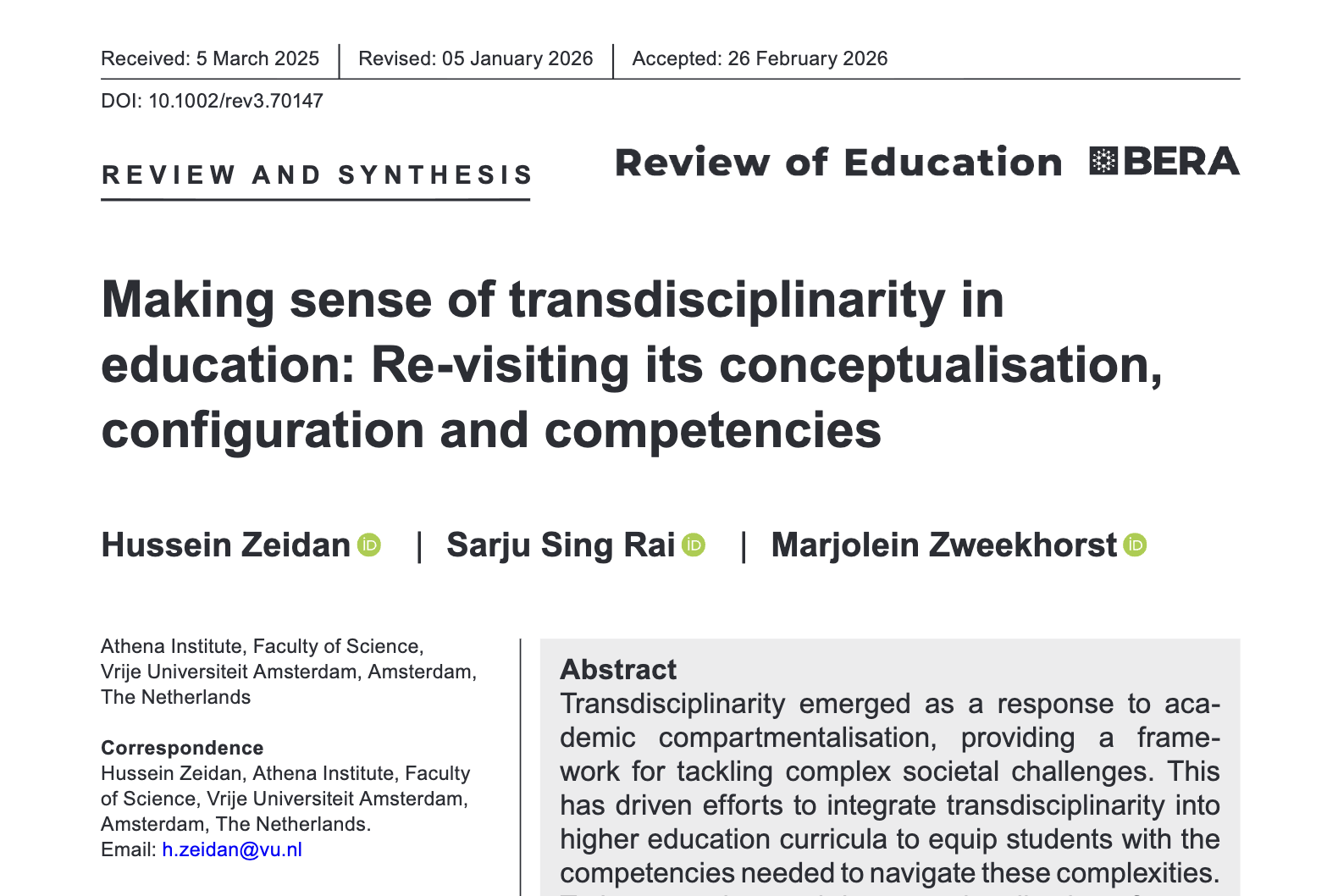
Making Sense of Transdisciplinarity in Education
A scoping review of 25 studies on how transdisciplinarity is conceptualised, configured, and assessed in higher education curricula.
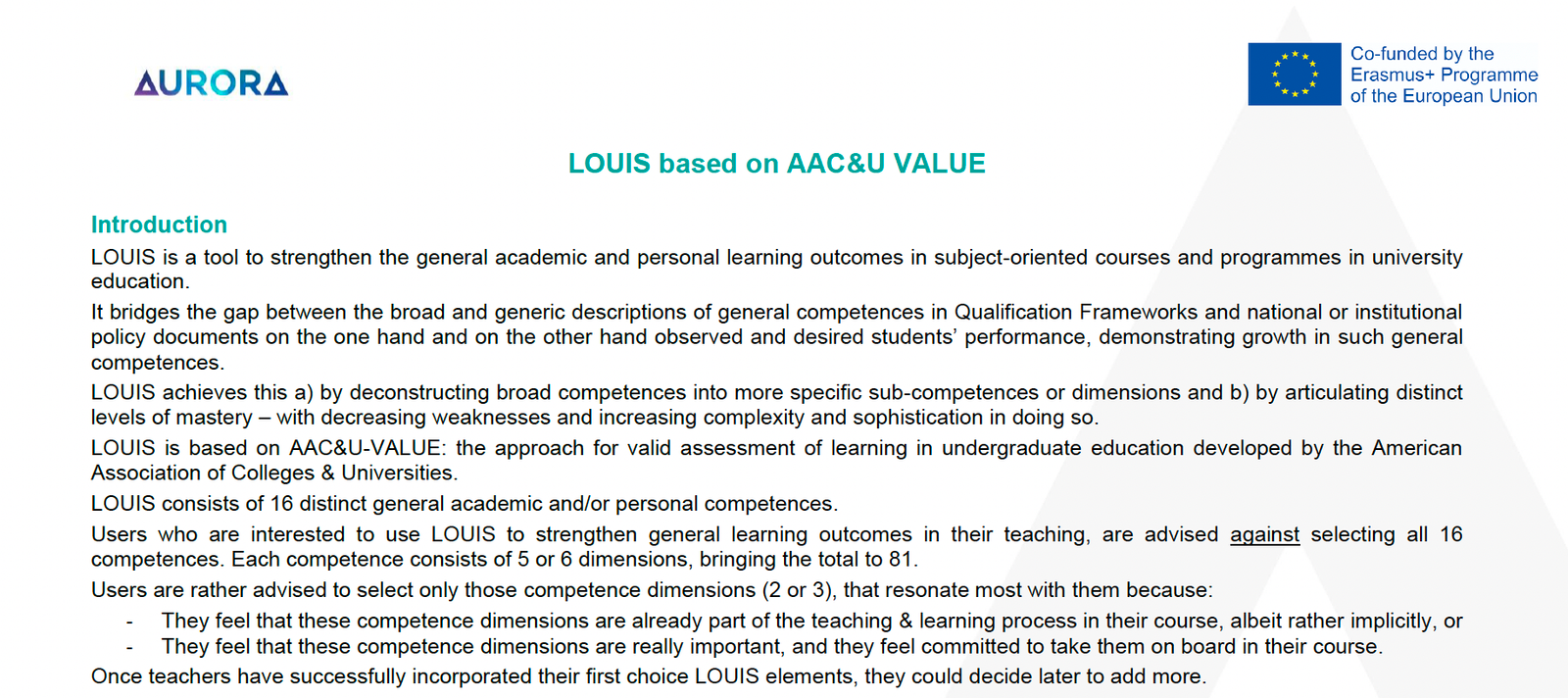
LOUIS Competence Tool
A tool from the Aurora Universities Network for assessing 16 general academic and personal competences (e.g., critical thinking, civic engagement). Based on AAC&U VALUE rubrics.
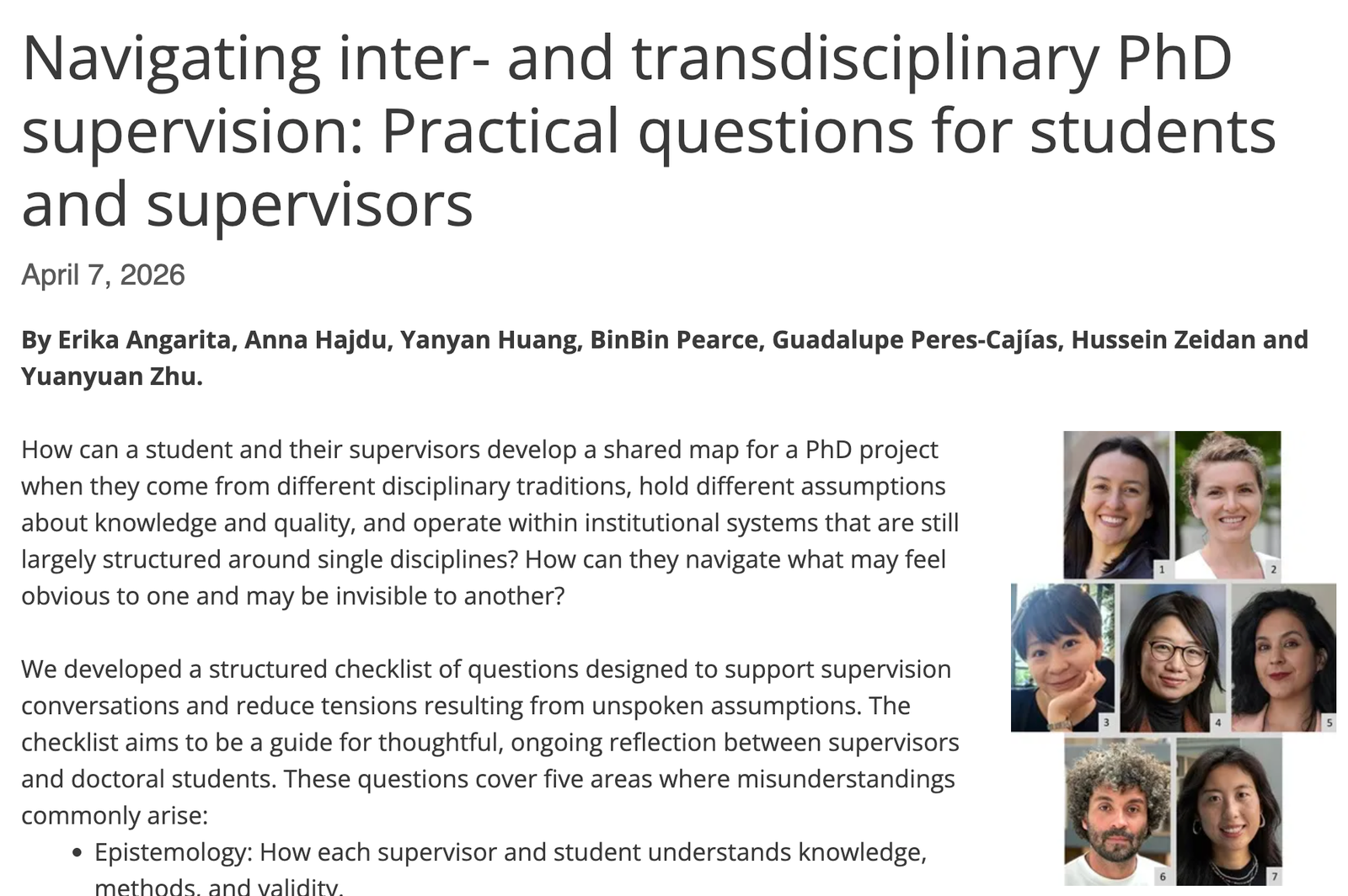
Navigating inter- and transdisciplinary PhD supervision
A practical guide of questions for students and supervisors navigating inter- and transdisciplinary PhD supervision. Published on the i2Insights blog (Integration and Implementation Sciences).
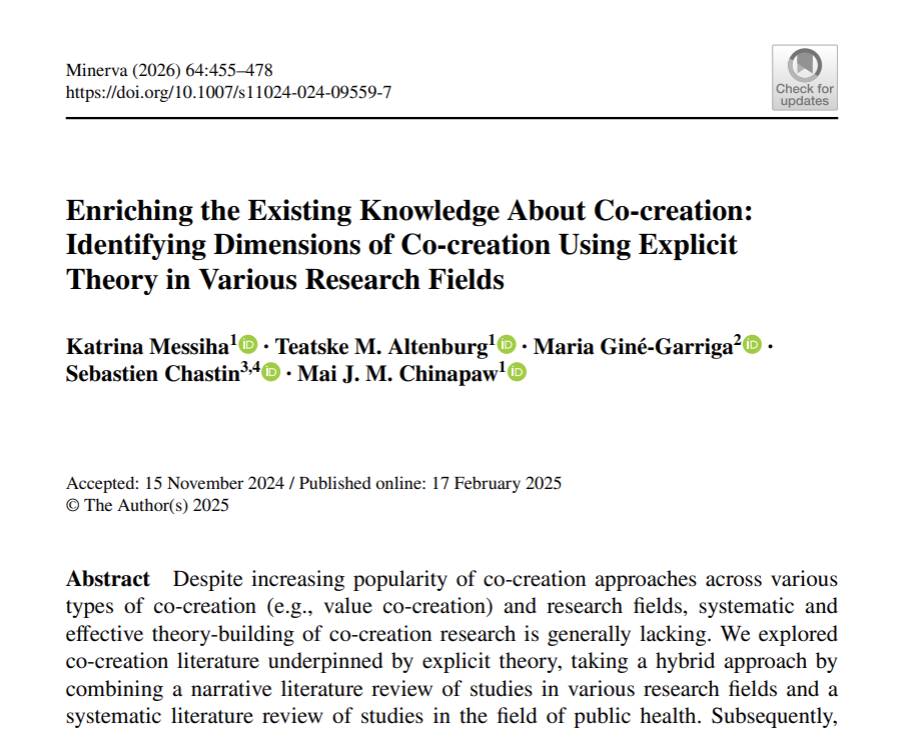
Enriching the existing knowledge about co-creation : identifying dimensions of co-creation using explicit theory in various research fields
Our Pre-Training Program
Before launching our new Transdisciplinary Problem Solving courses, we ran an introductory programme to help students step into the work prepared. The series opens with why transdisciplinary practice is essential for addressing global challenges, then moves to the core competencies students will develop and what they can expect from the courses themselves. It closes with practical strategies for teamwork and collaboration, plus clear guidelines and a complete course overview. Watch the full series on our YouTube channel.
Active Learning for Transdisciplinary Education
Real-world problems don’t respect disciplinary boundaries, and students can’t learn to cross them by listening. This five-part series shows how to design courses where students do the work: setting competency-based outcomes, aligning activities and assessment, writing a course narrative students can navigate, running problem-based learning and other active methods, and assessing through authentic tasks rather than recall. It’s made for university lecturers, trainers, and course designers working in any discipline.
Digital Active Learning: A Practical Series for Educators
A seven-part practical guide to designing digital active learning for online and blended courses. Dr. Sandra Barteit (Heidelberg Institute of Global Health) covers constructive alignment, problem-based learning, think-pair-share, peer instruction, role-play, breakout rooms, and feedback that challenges reasoning, plus how to use generative AI as a devil’s advocate rather than an answer machine. Examples come from global health and climate change, but the design logic transfers to any discipline.
Lessons and Products for TD Teaching from THE-GLOW
A practical guide to teaching transdisciplinarity, drawn from developing nine THE-GLOW courses on topics from zero hunger and simian malaria to responsible AI and urban farming. Assoc. Prof. Roy Batterham covers the two foundations every course shares: a strong team and respect for different ways of knowing. He also walks through a five-phase course structure, systems mapping as the glue that integrates disciplines, how to engage Experience-Based Experts such as farmers and Indigenous elders, and how to assess both group output and individual growth. It’s built for educators designing a full transdisciplinary degree or adding TD activities to existing courses.